

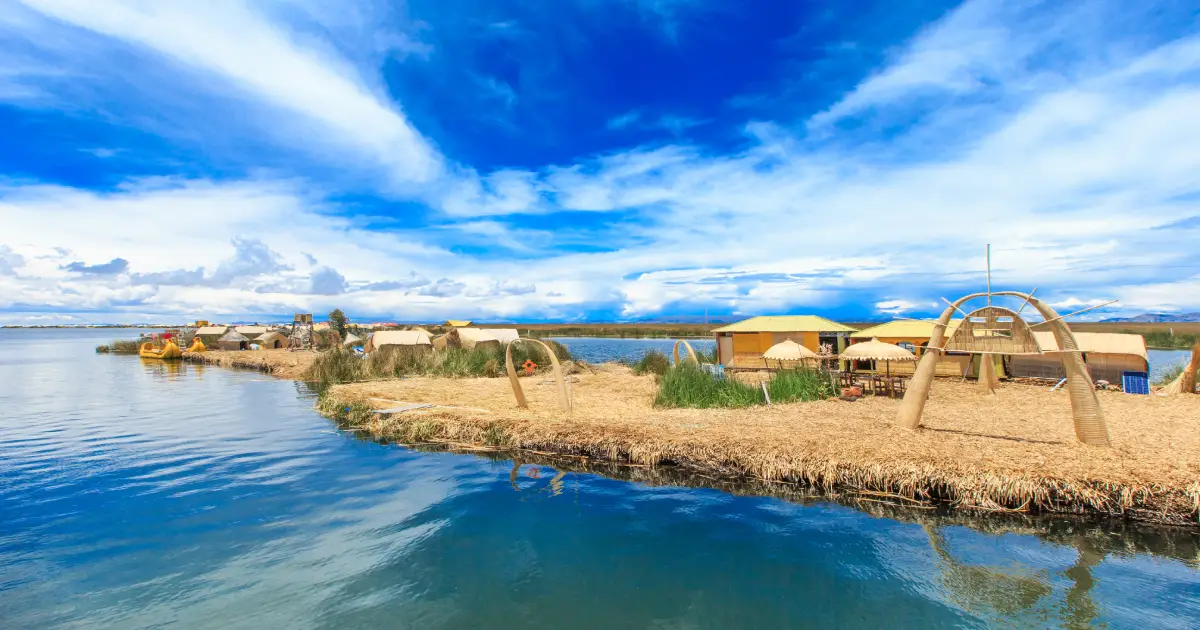

Lake Titicaca feels just like a giant inland sea floating right in the sky! Straddling the Peru-Bolivia border high on the Andean Altiplano, it’s famous for its intense blue water, epic big-sky sunsets, and the vibrant cultures that have thrived on the lake for centuries.
Fast facts and key statistics
Lake Titicaca, often celebrated as South America’s biggest lake by volume and surface area, is typically called a freshwater lake—even though many sources say its water is actually a bit brackish!
Useful stats to know when planning:
- Elevation: about 3,810–3,812 m (12,500 ft) above sea level.
- Surface area: about 8,372 km² (3,232 Square Miles)
- Mean depth (Lago Grande): about 107 m; maximum depth: about 281 m
- Two basins: the larger Lago Grande (Lago Chucuito) and the smaller Wiñaymarka (Lago Pequeño), connected by the Strait of Tiquina
A quick heads-up: Lake Titicaca is often dubbed the “highest lake in the world,” but more precisely, it’s the highest navigable lake on the planet! In reality, you'll find plenty of smaller lakes sitting at even higher altitudes.
What to expect: two countries, two flavors of Titicaca

Lake Titicaca tourism has two typical gateways:
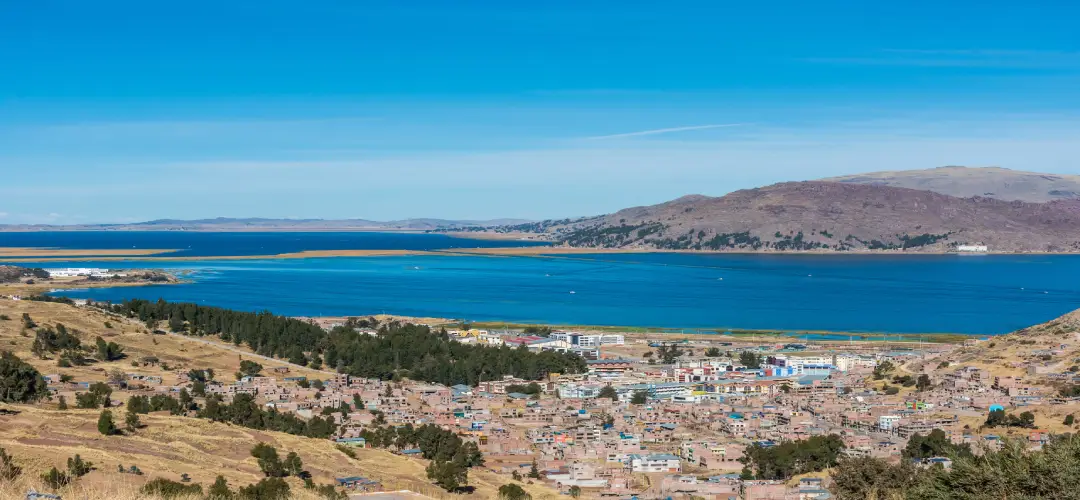
- Peru’s side: based around Puno, with easy access to the famous Uros floating islands and longer island itineraries to Taquile and Amantaní.
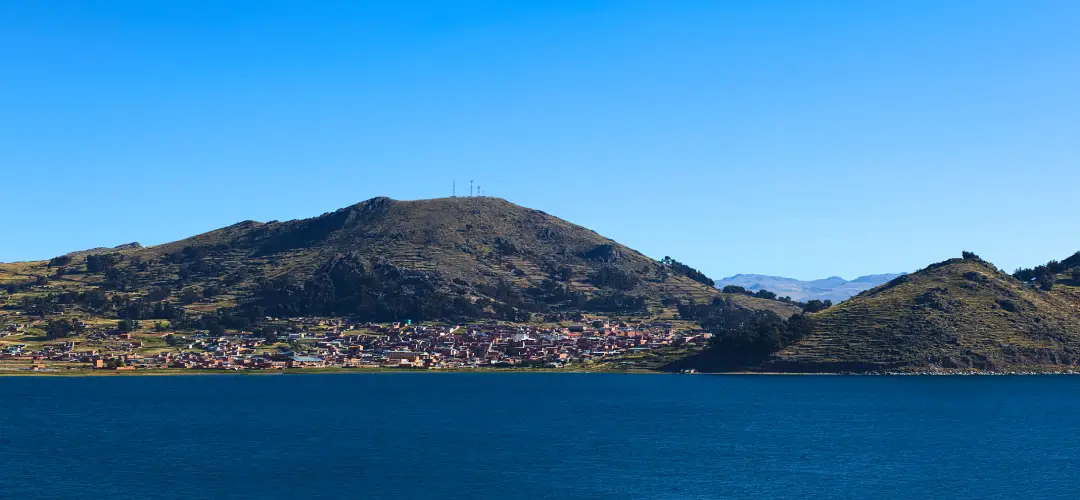
- Bolivia’s side: based around Copacabana, a smaller lakeside town and the classic launch point for Isla del Sol (Island of the Sun) and nearby sacred sites.
Both sides are in the same high-altitude boat: the light is extra crisp, the nights are chillier, and you'll definitely feel that elevation kick—especially if you're zooming up straight from the lowlands!
The Peruvian side: Puno, the Uros, Taquile, and Amantaní (Include Map of Puno)
The Uros floating islands: “man-made” life on reeds
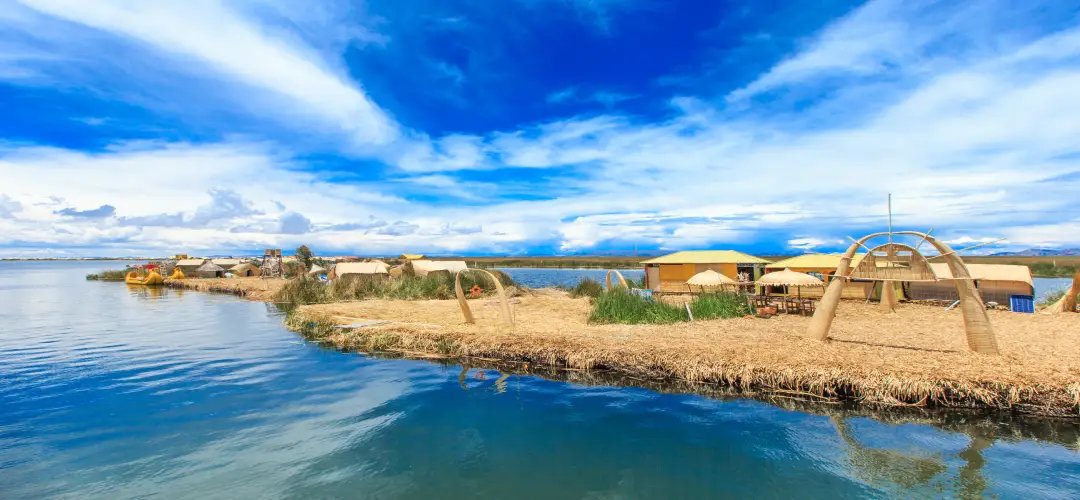
Stepping onto the Uros floating islands is a total "bucket list" experience! This incredible living archipelago is handcrafted from totora reeds gathered right from Lake Titicaca’s shallows. These reeds are more than building blocks; they’re the heartbeat of daily life, shaping everything from boats and crafts to tasty snacks and traditional fuel.
People often call these islands man-made because they're built from layers of floating root mats and reeds, anchored firmly in place, and kept in tip-top shape as the bottom layers naturally decay!
Uros visits are typically quick, half-day boat trips from Puno, often paired with other islands on longer tours!
Taquile: textiles, viewpoints, and island rhythm
Hop on a multi-island tour, and you'll likely land in Taquile, a spot world-famous for its incredible weaving and deep-rooted community traditions. Life moves at a different rhythm here—think conquering steep stone steps and soaking in endless lake views for a true taste of living heritage!
Amantaní: homestays and starlit silence
For a more immersive Lake Titicaca experience, consider staying overnight! This allows the location to feel less like a checklist item and more like a true adventure. Many operators run 2D/1N itineraries that combine Uros, Amantaní, and Taquile, which often include a cozy family homestay on Amantaní.
When night falls, the lake turns super peaceful, and the stars look so close you could practically grab them—it’s totally one of the best-kept secrets of traveling way up here!
The Bolivian side: Copacabana and Isla del Sol (Include map of Copacabana)
Copacabana: the relaxed launchpad
Copacabana is Bolivia’s favorite hotspot for diving into Lake Titicaca, offering easy boat rides and a much chillier, cozier vibe than Puno. Many travelers choose Copacabana for its laid-back lakeside energy and the easy hop over to the lake's most legendary island.
Isla del Sol: Inca mythology, terraces, and sacred landscapes
Isla del Sol, or Island of the Sun, is one of Lake Titicaca’s biggest and most legendary spots! It's packed with trails that link cozy little villages and offer seriously stunning views of the water. You can easily hop on a boat from Copacabana to get there, and the whole place is bursting with Inca sacred tradition and cool mythology.
Here’s what’s in store: winding footpaths, epic ancient ruins and terraces, and sweeping, cinematic views—all glowing perfectly in that early morning or late afternoon light!
The “man-made islands” and other lake wonders: choosing the right cruise
Where to book cruises and island visits
Most so-called Lake Titicaca “cruises” aren't luxury mega-ship voyages; they are boat tours ranging from a few hours to multiple days. The two most common booking centers are:
- Puno, Peru: day trips to Uros, and longer itineraries to Taquile and Amantaní (often 2D/1N with homestay).
- Copacabana, Bolivia: boats/ferries to Isla del Sol (and sometimes Isla de la Luna), usually as day trips or overnight hikes on the island.
What to look for when choosing a tour:
- Time on the islands: some itineraries rush; others build in walking and community interaction.
- Group size: smaller groups often feel more respectful and immersive.
- Overnight option: if you can spare it, an overnight on Amantaní (Peru side) or Isla del Sol (Bolivia side) changes the lake's whole feel.
How to access Lake Titicaca
Getting to the Peruvian side (Puno)
Most travelers reach Puno via:
- Flight to Juliaca (Inca Manco Cápac International Airport), then transfer to Puno (common approach), or
- Bus/train routes from Cusco/Arequipa (popular overland circuits).
Getting to the Bolivian side (Copacabana)
Most travelers reach Copacabana via:
- La Paz → Copacabana overland route, often including a crossing at the Strait of Tiquina area and (for some itineraries) border formalities if continuing into Peru.
Get settled into Lake Titicaca's high altitude by catching some Z's, staying hydrated, and keeping your first day nice and easy, whether you're arriving from Cusco, La Paz, or Lima!
A brief historical overview: why Titicaca matters
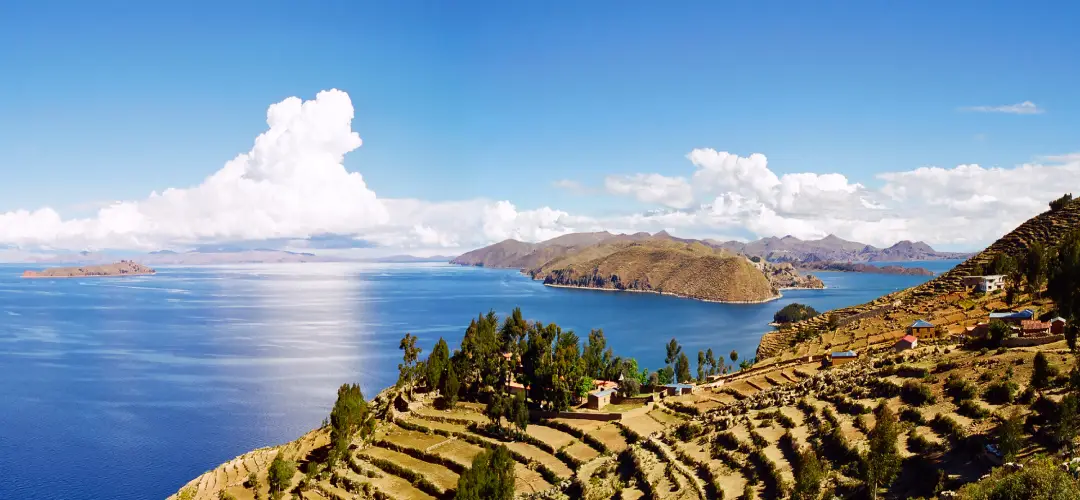
Lake Titicaca isn't just scenic—it's bursting with history and sacred vibes! This region has long been home to Indigenous Altiplano cultures. The lake takes center stage in Andean cosmology and Inca tradition, with spots like Isla del Sol woven right into their origin stories. Even the underwater world is an archaeological treasure trove, as investigations have uncovered fascinating artifacts around the reefs and islands!
Tourism realities and helpful planning facts
- Best time to visit: Many travelers prefer the dry season (roughly May–October) for clearer skies and steadier boat conditions; the wet season (roughly Nov–March) can bring dramatic skies but also more rain and occasional travel disruptions. (If you want, tell me your travel month, and I’ll tailor a weather/packing plan.)
- Time to allocate to explore the lake:
- 1 day: Uros + quick lake views (fast but common)
- 2 days: Uros + Taquile or Uros + Amantaní (better)
- 3+ days: add Isla del Sol on the Bolivian side for a richer “two-country” Titicaca
Lake Titicaca is where geography and culture totally intertwine! It’s a high-altitude lake that feels just like the sea, home to amazing communities living on hand-crafted reed islands, and landscapes packed with centuries of memories. Just let me know if you’re kicking off from Cusco, La Paz, or Lima, and I’ll map out a perfect itinerary with real-deal travel times for Peru, Bolivia, or a cool cross-border loop!

0 Comments